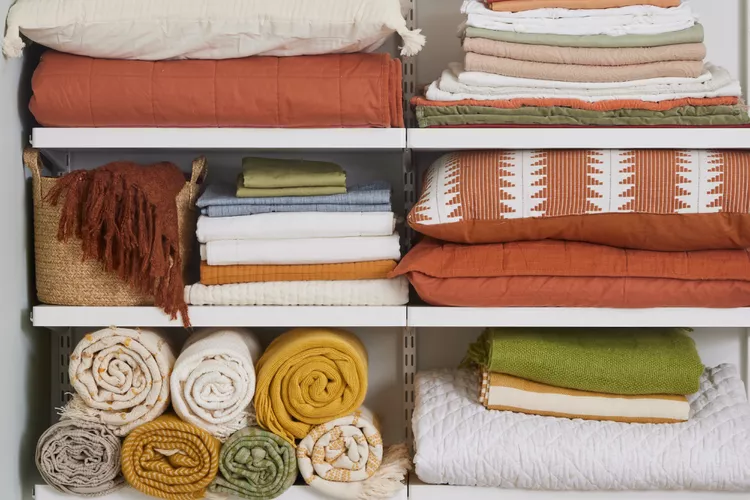
Comforters, blankets, and extra pillows consume surprising amounts of closet space because their volume matters more than their weight. Seasonal bedding storage works best when clean linens are compressed only when appropriate, protected from moisture, and arranged so one winter blanket doesn’t require dismantling an entire closet.
Clean Everything Before Long-Term Storage
Wash or professionally clean bedding according to its care label before putting it away for several months. Small amounts of body oil, food residue, or moisture can lead to odors and discoloration during storage.
Make sure every item is completely dry. Folding slightly damp bedding into a closed container can trap moisture for weeks.
Group Bedding by Room or Season
Store related items together rather than building one huge pile of miscellaneous linens. A winter-bedroom set might include its comforter, matching blanket, and spare pillow covers.
People browsing home storage planning can use labeled groups to reduce the time spent searching through nearly identical textile bundles.
Choose Containers Based on the Material
Rigid bins offer strong protection from dust, pests, and accidental spills. Breathable fabric bags are often useful inside clean closets where moisture exposure is less likely.
Vacuum bags save considerable space, but they aren’t ideal for every filling. Repeated heavy compression may flatten some lofty materials, especially when bedding remains compressed for long periods.
| Storage Method | Best Use | Tradeoff |
|---|---|---|
| Fabric bag | Clean indoor closet | Limited spill protection |
| Plastic bin | Basement or utility area | Takes more room |
| Vacuum bag | Bulky synthetic bedding | May compress loft |
| Shelf basket | Frequently rotated blankets | Less dust protection |
Make Use of High and Underused Spaces
Upper closet shelves are well suited to lightweight bedding because these pieces don’t create the same lifting risk as heavy storage boxes. Place the least frequently used items highest.
Under-bed storage is another option when clearance allows it. Low-profile containers keep blankets accessible while freeing bedroom closets for clothing.
Broader interior organization concepts can help identify unused areas such as deep shelf corners, window-seat compartments, or storage benches that already exist in the home.
Fold Bedding to Fit the Storage Space
There’s no universal perfect fold. Instead, fold each piece to match the dimensions of its container or shelf so empty gaps are minimized.
Place heavier folded blankets underneath lighter comforters. Pillows should not be crushed beneath dense stacks because extended pressure can distort their filling.
An occasional inventory check also helps. Seasonal storage tends to accumulate damaged sheets, mismatched covers, and blankets nobody uses unless those pieces are deliberately reviewed.
Where Bedding Storage Commonly Goes Wrong
The biggest problem is assuming any hidden space is suitable. Hot attics, damp garages, or areas with large temperature swings may expose textiles to moisture, odors, insects, or material deterioration.
Another mistake is packing containers so tightly that bedding can’t be removed without disturbing everything around it. Household storage should save effort, not create a puzzle.
For ideas on making existing rooms work harder, space-conscious home planning can complement a system built around closets and furniture already in use.
Frequently Asked Questions
Can comforters stay in vacuum bags all year?
Some synthetic comforters tolerate compression reasonably well, but long-term compression may reduce loft in certain fillings. Check the care instructions and avoid tightly compressing bedding whose warmth depends on maintaining a fluffy structure.
What is the best way to store extra pillows?
Keep pillows clean, completely dry, and protected from dust. Breathable storage bags work well in dry indoor closets, while rigid bins may provide better protection in utility areas where spills are possible.
Should seasonal bedding be stored with dryer sheets?
It’s usually better to store freshly cleaned, fully dried bedding without strongly scented products. Fragrances can transfer to fabric, and keeping the storage environment clean and dry matters more than masking odors.
Build a Better Seasonal Rotation
Treat seasonal bedding as a rotating household category rather than forgotten closet contents. Clean each piece, choose storage that suits its material, and group items according to where they’ll be used next. A well-organized seasonal system frees valuable space while ensuring your comforters, blankets, and pillows are ready when temperatures change.