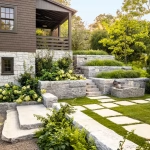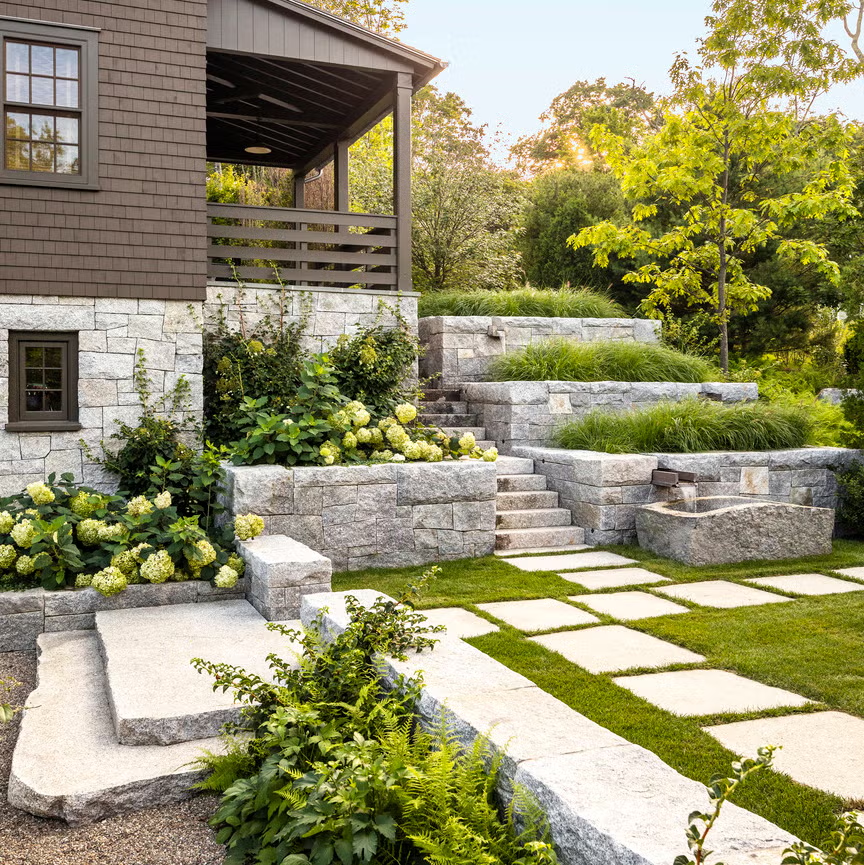
A retaining wall can do more than hold back soil. With the right height, depth, top surface, and surrounding layout, part of the structure can double as useful outdoor seating without requiring separate benches that consume additional space.
Successful retaining wall seating ideas begin with the wall’s structural job first. Seating should be treated as an added function, not a reason to compromise drainage, stability, or access around the landscape.
Decide Where Seating Is Actually Useful
Not every section of a retaining wall needs to become a bench. Seating works best where people naturally pause: beside a patio, around a fire feature, near a garden, or along the edge of an outdoor dining space.
Long uninterrupted seating can feel formal and may rarely be fully used. Shorter seating zones mixed with planting often feel more relaxed and create a better balance between hardscape and greenery.
Think about views as well. A seat facing a fence or service area will receive less use than one oriented toward a garden, conversation zone, or open section of the yard.
Shape the Wall Around Outdoor Activity
Retaining walls next to patios can help define the usable outdoor room. Studying different backyard planning ideas can show how seating walls, paving, water features, lawns, and circulation routes work together instead of competing for the same space.
A smooth cap provides a more comfortable seating surface than rough masonry. Rounded or slightly softened edges are also friendlier when people are sitting, leaning, or moving through a compact patio.
If cushions will be used, plan somewhere dry to store them. Permanent outdoor seating loses much of its appeal when every use requires dealing with wet or dirty cushions.
Blend Hardscape With Softer Details
Stone and concrete can dominate a small garden if every surface is visually hard. Nearby planting helps soften retaining wall seating and keeps the area from resembling a continuous masonry enclosure.
Ideas from relaxed residential spaces can translate outdoors through comfortable proportions, natural materials, layered textures, and seating arrangements that encourage conversation rather than lining everyone up in a single row.
| Wall Feature | Useful Approach | Reason |
|---|---|---|
| Seating cap | Smooth, broad surface | More comfortable |
| Planting pocket | Breaks long wall sections | Softens masonry |
| Corner seat | Faces activity area | Better conversation |
| Integrated lighting | Low, indirect output | Improves nighttime use |
Low-voltage lighting can be incorporated beneath caps or nearby, but glare should be controlled. People seated close to a wall light will notice excessive brightness quickly.
Keep Structure and Drainage in Control
Landscaping decisions should never ignore the wall’s primary purpose. Anyone gathering property planning references should remember that soil pressure, drainage, slope conditions, wall height, and local requirements can all affect how a retaining structure is built.
Adding a wide seating cap does not automatically make every wall suitable for people to sit on. The structure beneath it must be stable, and the surrounding ground should remain easy to approach without awkward drops.
Water management matters too. Trapped water behind a retaining wall can create pressure and long-term problems, so decorative choices should not block drainage paths.
Where This Idea Can Go Wrong
The biggest mistake is designing the wall as furniture before designing it as a retaining structure. Attractive seating cannot compensate for poor foundations, inadequate drainage, or unsuitable materials.
Another problem is forcing seating into circulation paths. A wall may have perfect sitting height but still be uncomfortable if people using it block a walkway or face directly into passing foot traffic.
Too much seating can also reduce planting space. Often, one or two deliberate seating sections work better than turning the entire wall into a continuous bench.
Frequently Asked Questions
Can every retaining wall be used as seating?
No. Suitability depends on the wall’s construction, stability, dimensions, location, and access. Existing walls should not automatically be assumed to support seating simply because the top surface appears wide enough.
What makes a retaining wall seat more comfortable?
A smooth top, sufficient sitting depth, comfortable edge treatment, useful orientation, and some separation from busy walking routes all help. Cushions can add comfort where weather and storage conditions make them practical.
Should seating run along the entire retaining wall?
Usually not. Short seating zones often create better landscaping opportunities and allow planting to break up the hard surface. Place seating where people are most likely to gather rather than maximizing bench length.
Give the Wall Two Jobs Without Confusing Them
A seating wall works best when its structural role remains invisible during everyday use. Build around sound retaining principles first, then refine the cap, orientation, planting, and lighting for comfort. Done well, the wall controls the landscape while quietly providing one of the yard’s most useful places to sit.